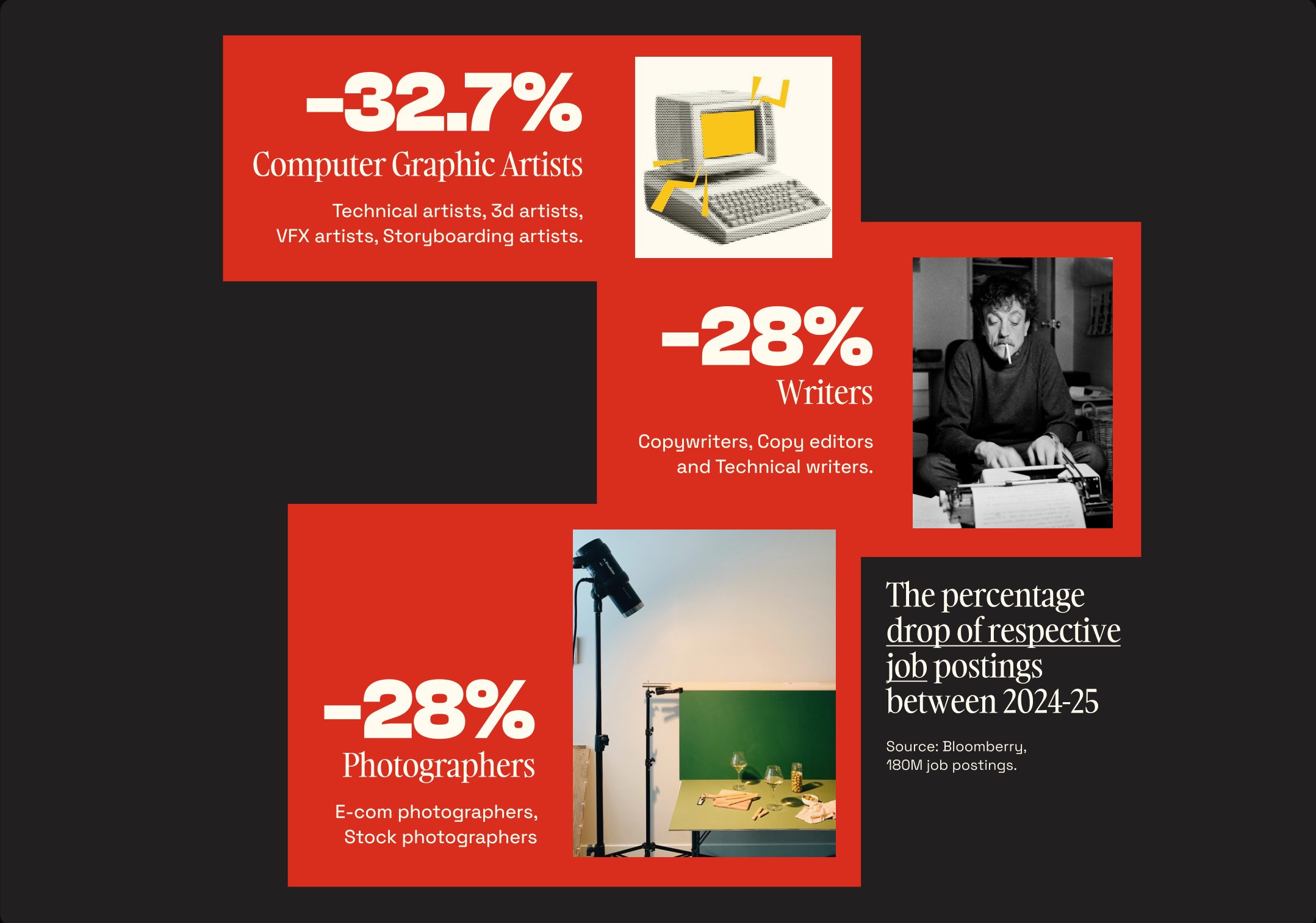
Execution-based creative roles are declining while roles that need creative judgement hold steady. So creatives have to foreground their judgement to get hired, and finish a portfolio to show it. The two tasks are linked, and no tool treats them that way. Articurate does.
Over two years at the agency I watched AI creep in and change what got asked for in meetings.
What was it doing to the people, not just the jobs? I interviewed eighteen creative professionals across roles and seniorities, and asked how they felt and how they were adapting.

All eighteen said some version of "if AI does most of what I used to do, what's still mine?"
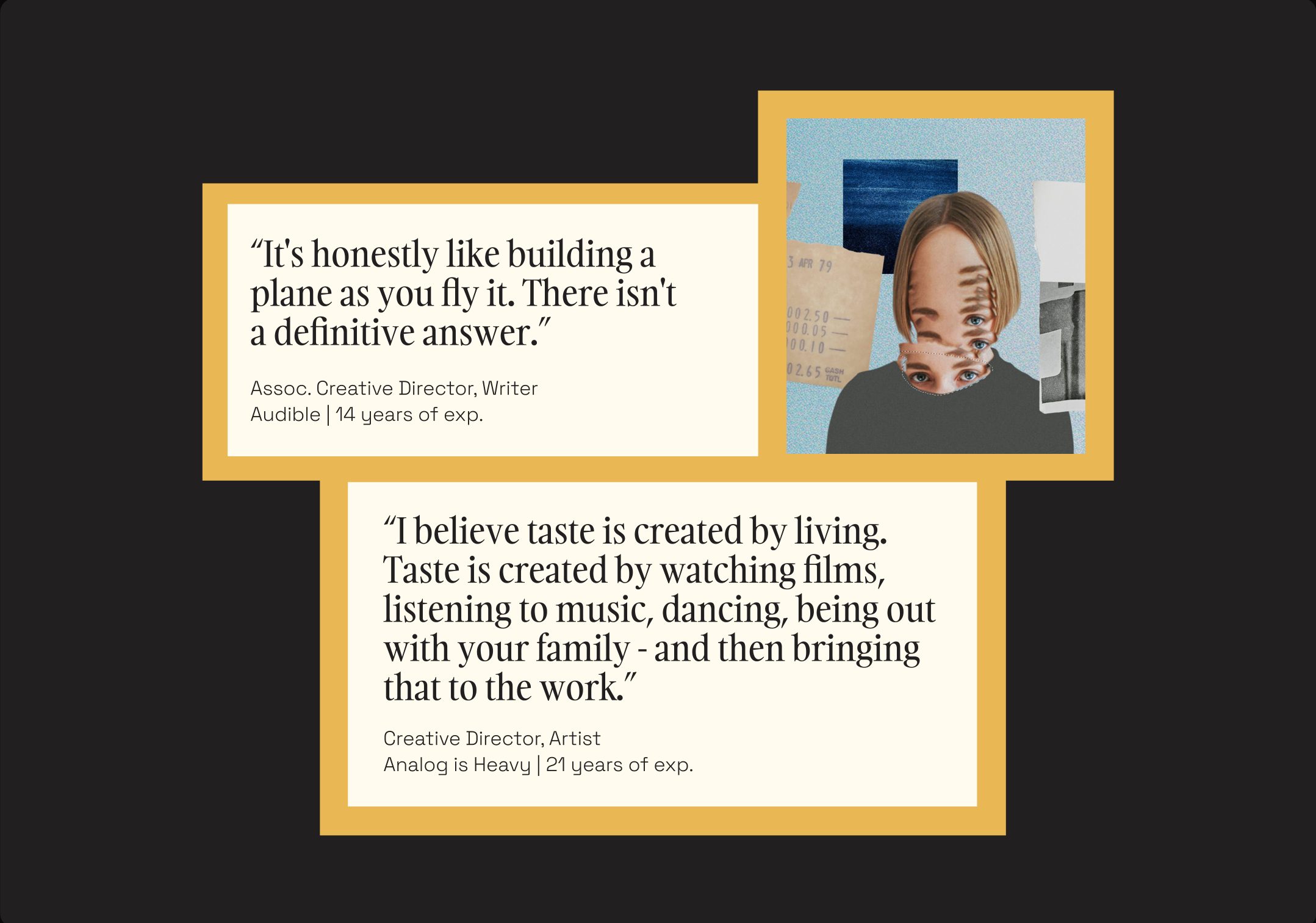
The seniors talked about taste. The juniors felt pushed to develop it faster than it develops.

The work used to speak for itself. Now the thinking underneath it has to be said out loud.
The first tool tracked contributions inside project management software. It felt like surveillance, and it asked organisations to pay for something only individuals get.
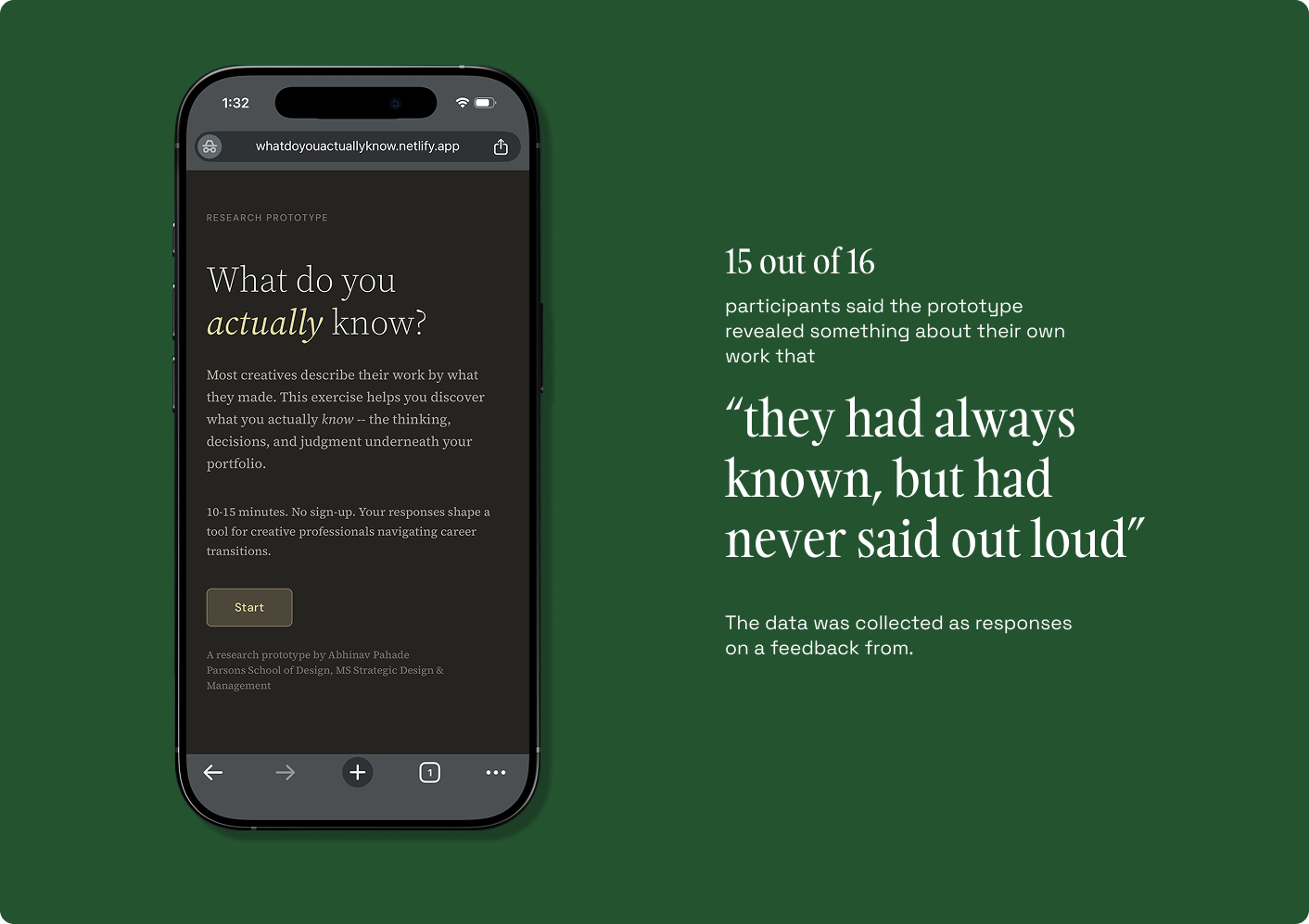
So the question turned around. An adaptive prototype asked people about a project they were proud of. Sixteen tested it.

A web tool that takes your past work in whatever shape it exists and asks what constrained you, what you decided, what you rejected, what you added that nobody asked for. Project by project, then across all of them.
It mirrors the answers back as named skills, in your own words, and stays live as you add work.
My master's thesis, and still being built. I initiated the inquiry, ran the research and interviews, built the prototypes for testing and branded the product. The backend and the front-end UX are next.
Live at articurate.netlify.app. V2 was rebuilt after alpha testing exposed V1's publishing layer.
Next: collaborators to tighten it, then a pilot at Parsons with graduating students.