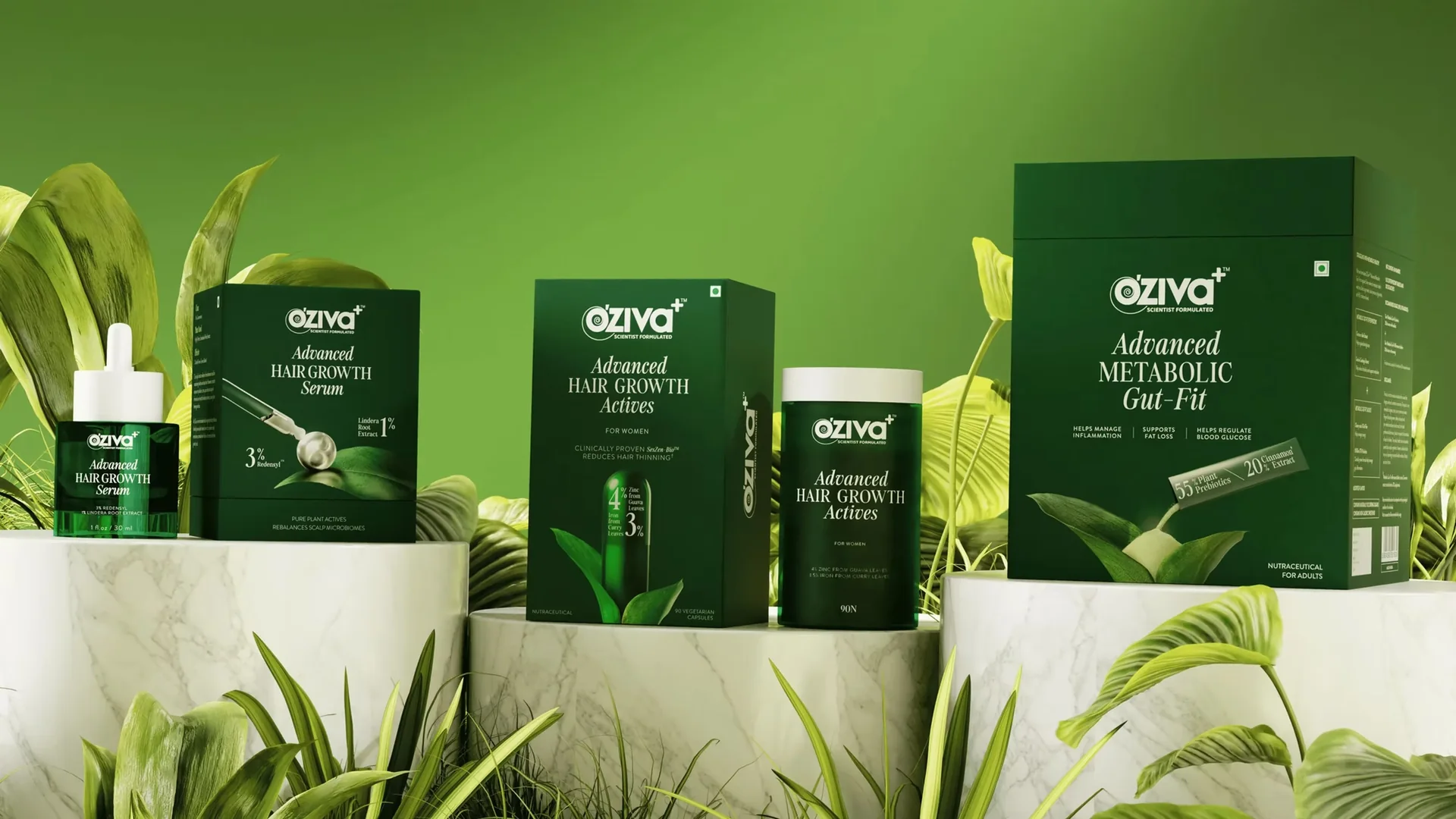
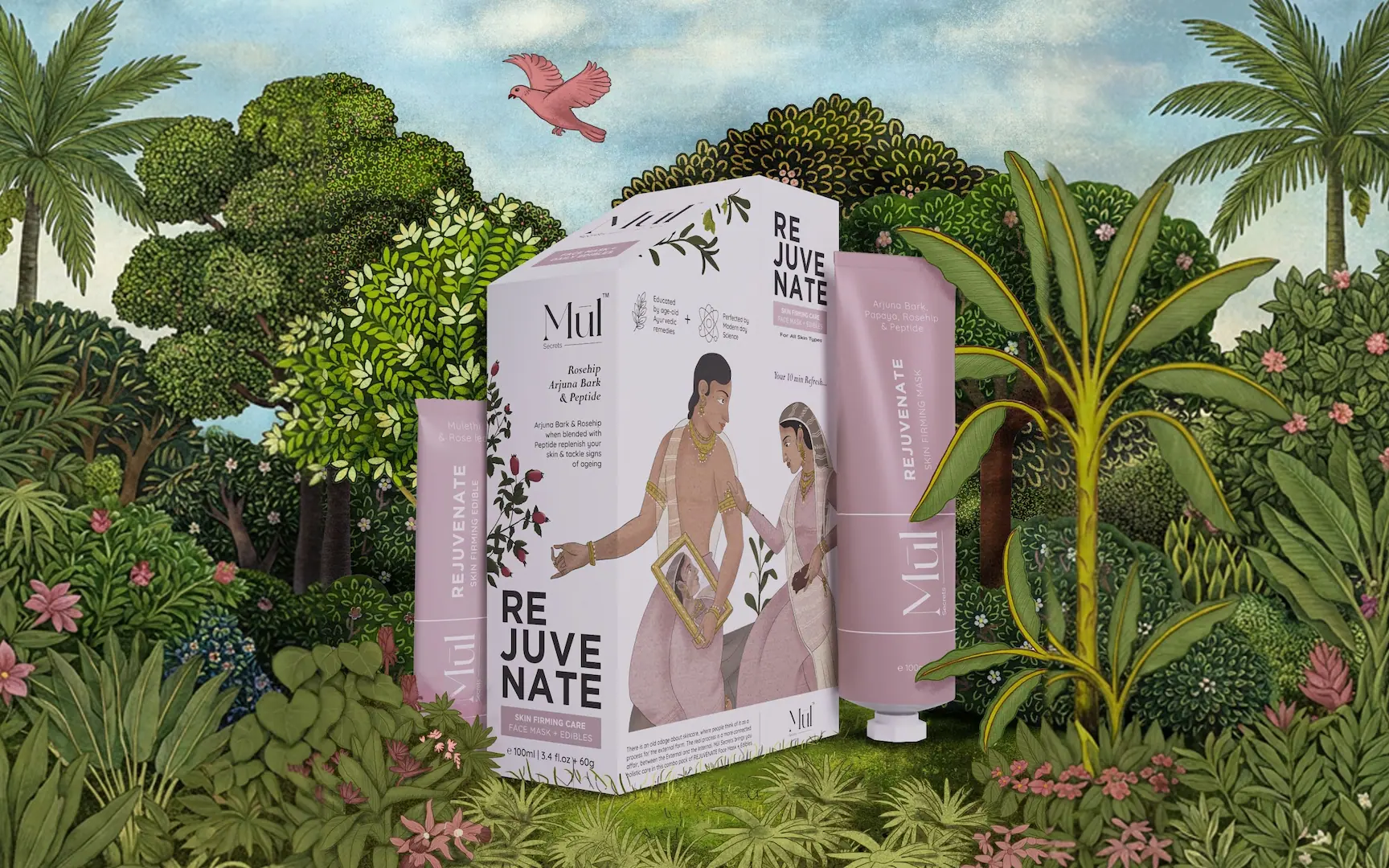
Hindustan Unilever (HUL), Unilever's Indian arm and the country's largest CPG company, invited Yellow to pitch for the OZiva Advanced design mandate: packaging for a new premium tier above the existing range. What began as one line became three.
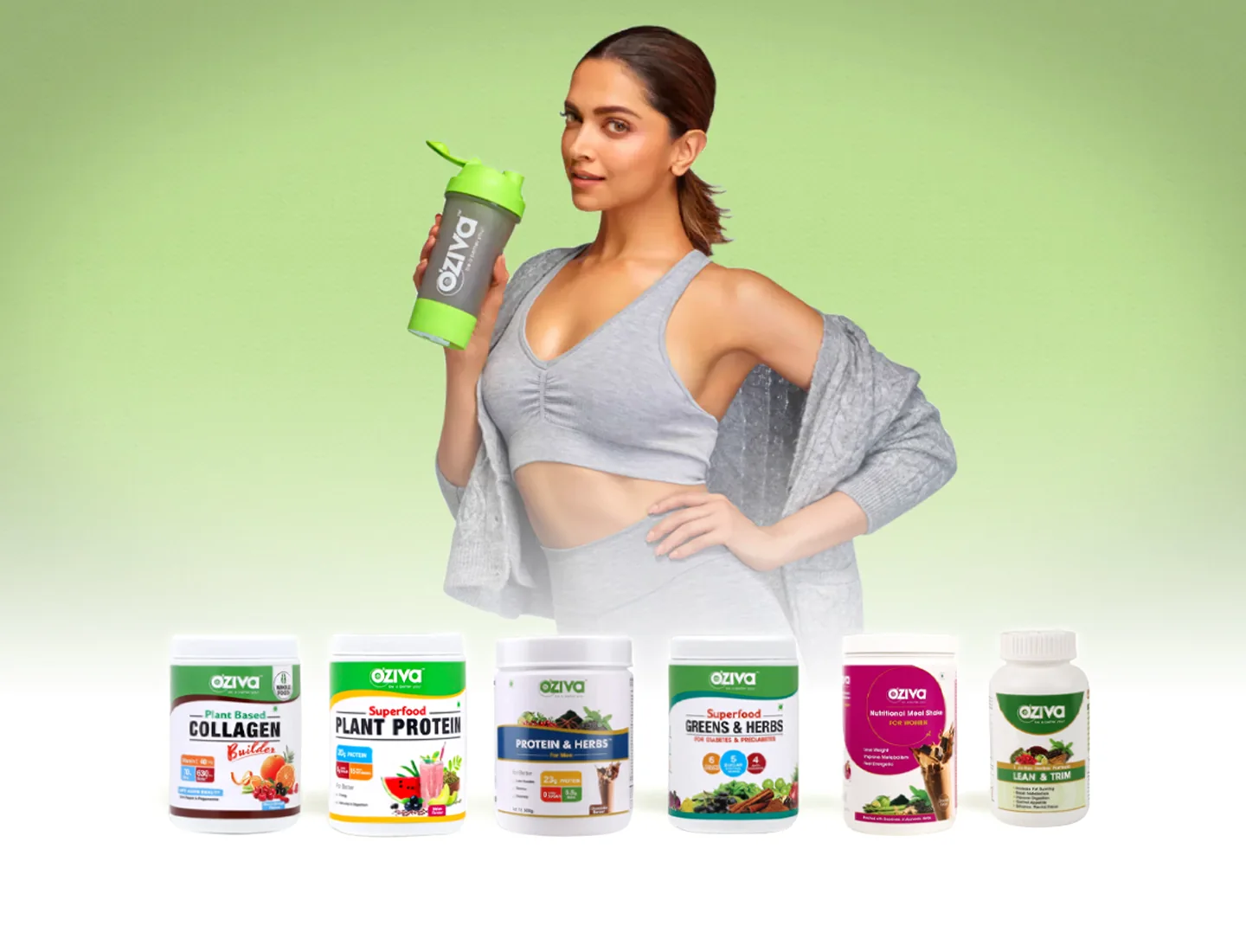
With effective products, a swirl and a roughly consistent shade of green, OZiva became a $100M CPG brand for affordable nutraceuticals.
HUL took over the brand and wanted to reach a more informed customer under OZiva Advanced.
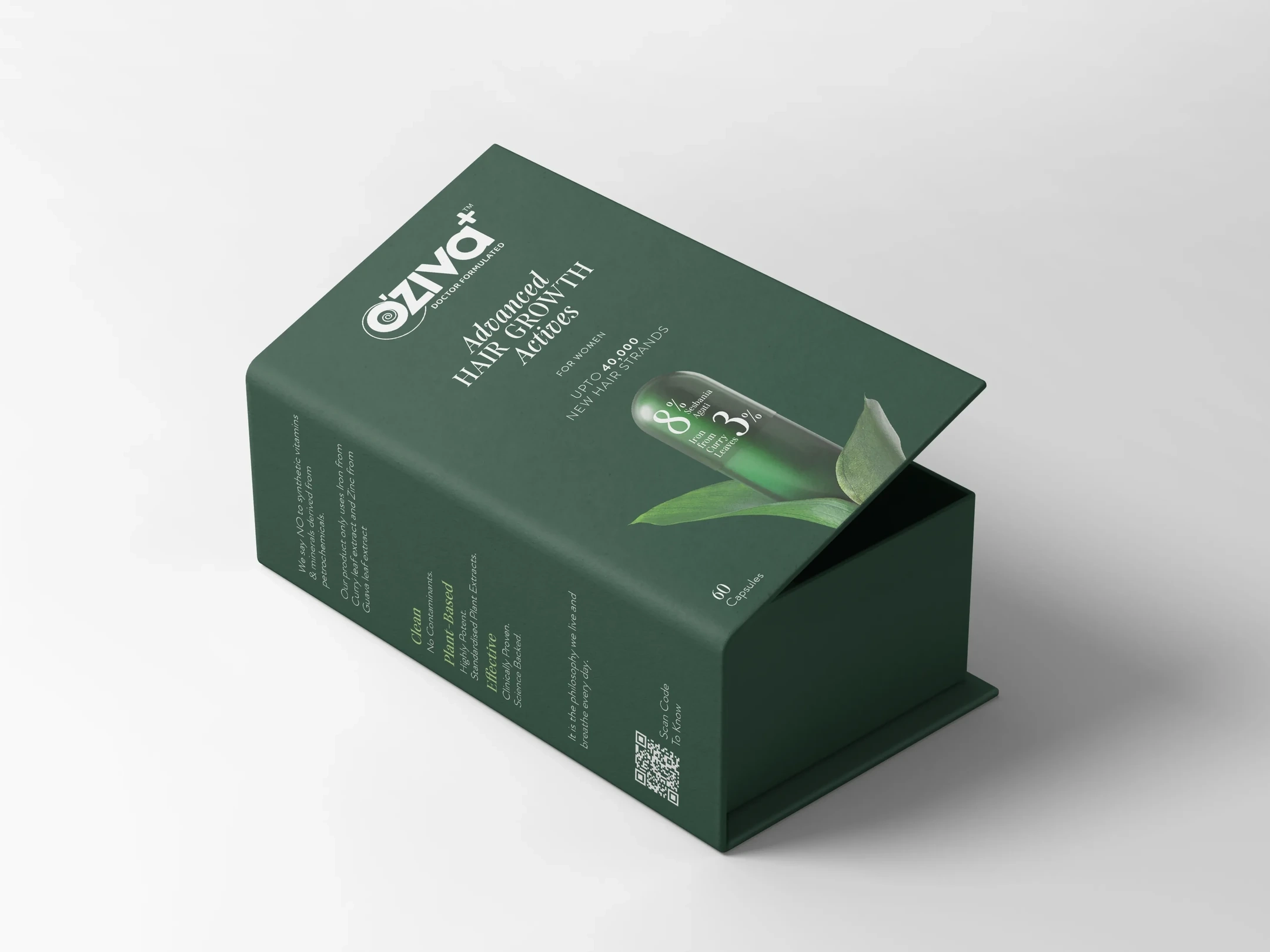
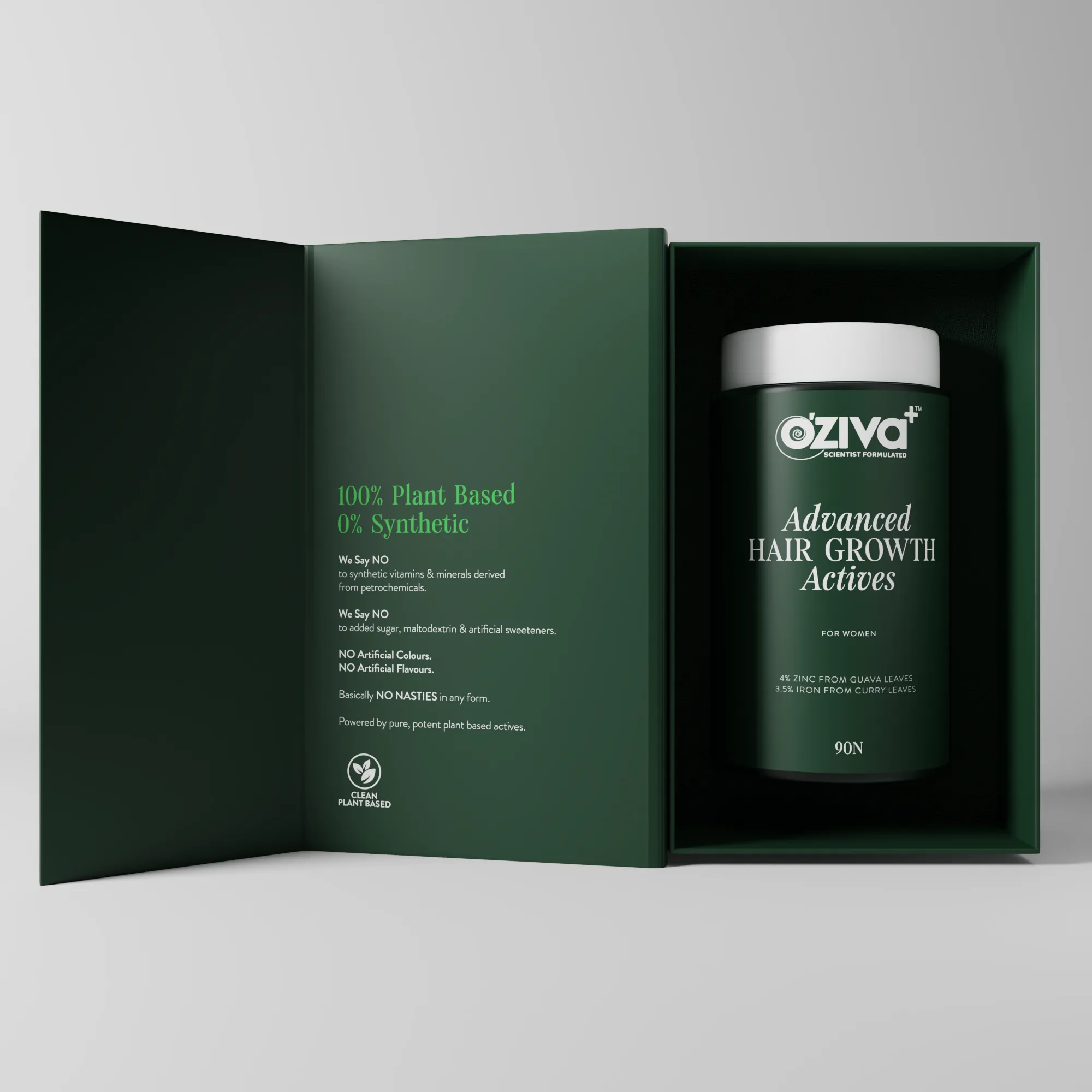
They needed an identity and design architecture for Advanced that would read as an evolution of the base line and lift overall brand perception. Yellow was to set it by designing the first three products.

Research into the premium nutraceutical category showed brands entering a pricier segment shed ingredient illustrations for cleaner, more minimal layouts.
HUL's own data said the opposite: in this category, packs that foregrounded ingredients sold better.
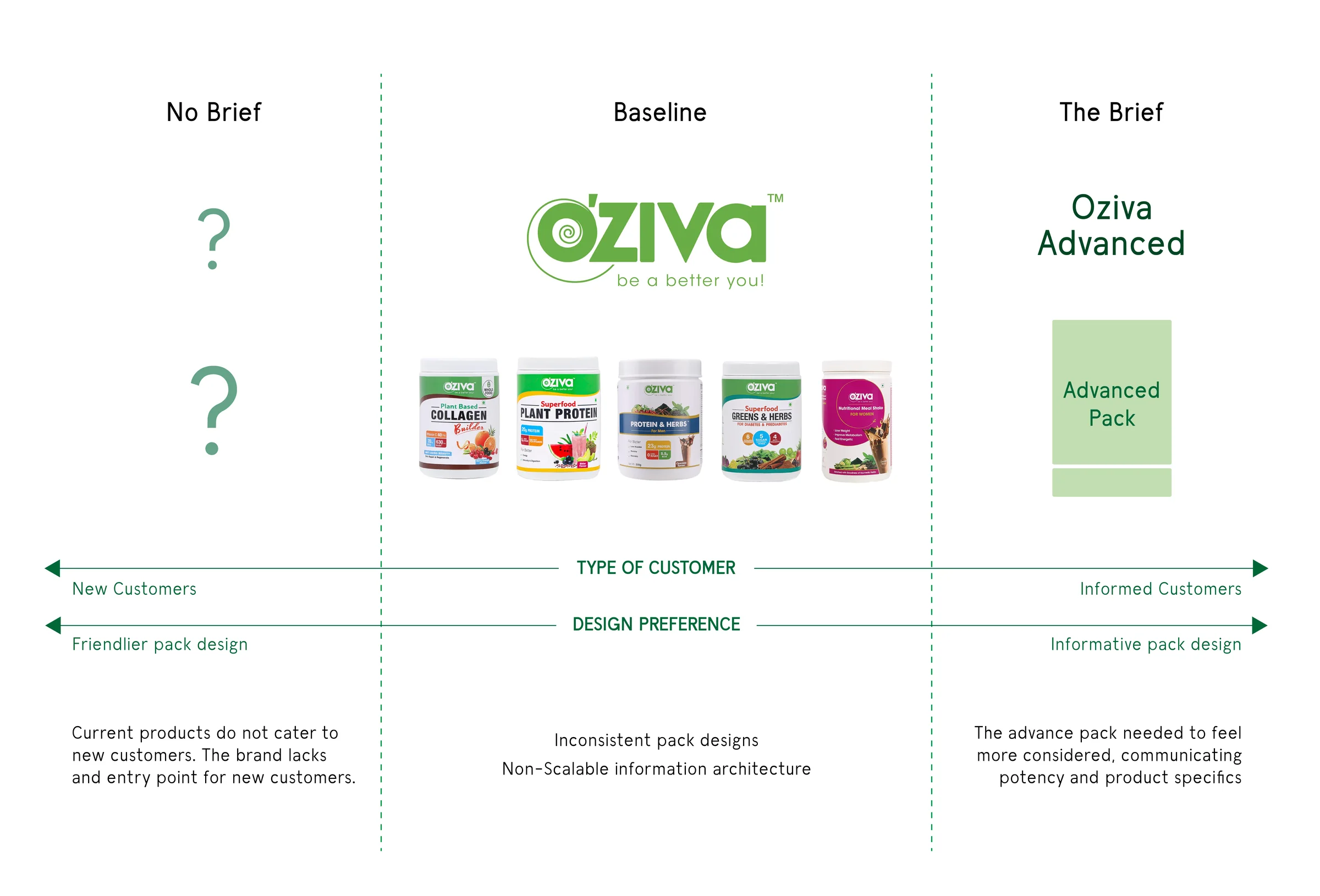
Blind tests and polls on the baseline split the audience. New customers wanted wellness that felt less serious. Informed customers wanted products that felt more considered.
And they are not one customer at three price points. Someone only curious about nutraceuticals would never reach for Advanced, and the baseline, which should have been their way in, reads clinical enough to put them off.

OZiva's line served neither customer, and Advanced would close the gap at only the informed end. There was still no way in for someone getting curious.
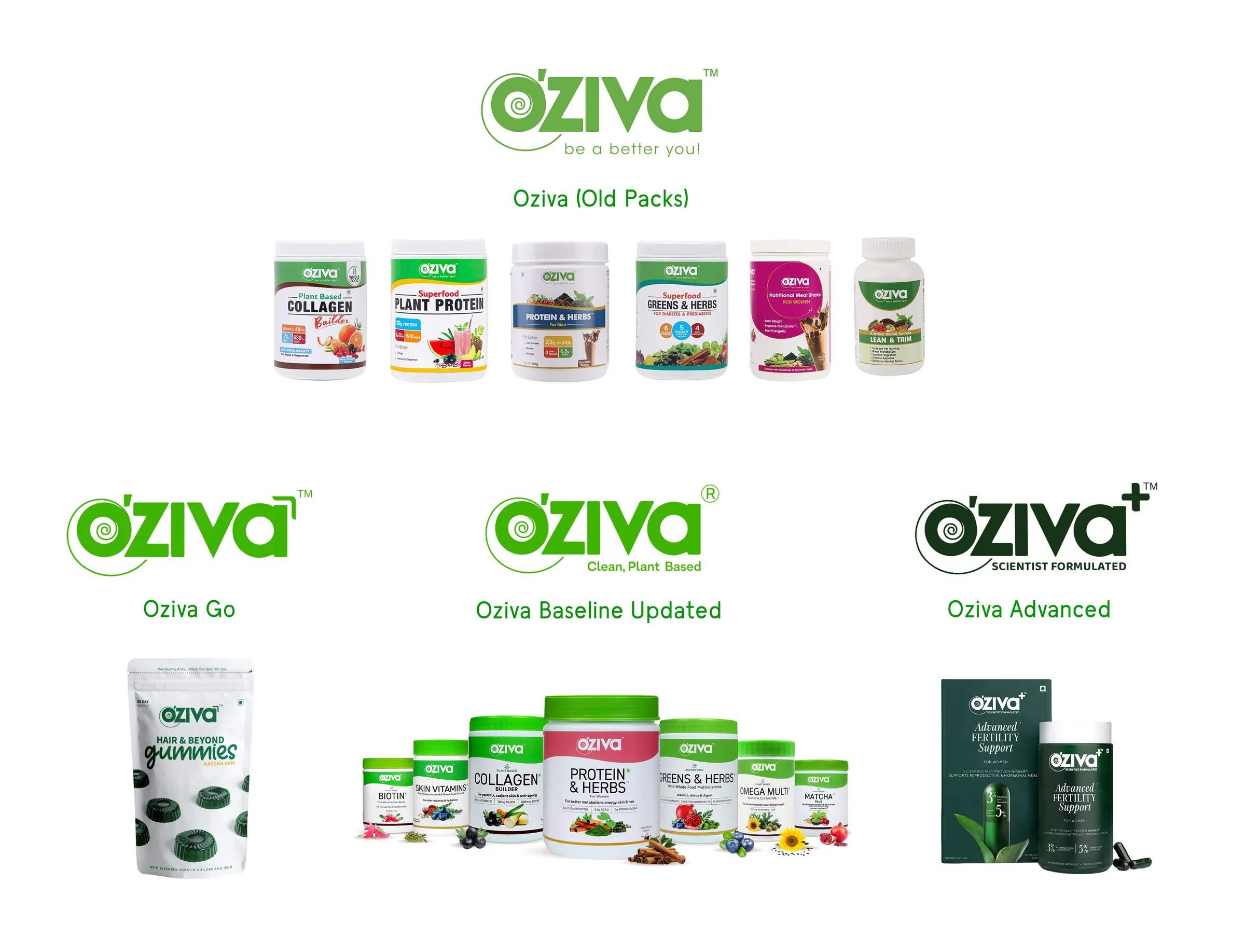
So the range could not be built as a ladder. It had to work as a portfolio: three lines, each pitched at how much its customer already knows, distinct enough to be told apart at a glance and connected enough that one can lead to the next.
Advanced had to carry the premium tier without reading as a separate brand, and the updated baseline had to stop turning away the customer Go was there to catch.


I led the internal research and the first design pitch that won the account, updated the design architecture for the base line, and designed the new Advanced line alongside another senior designer. The HUL team provided the market research and guided strategy, and the Creative Director made the final calls.
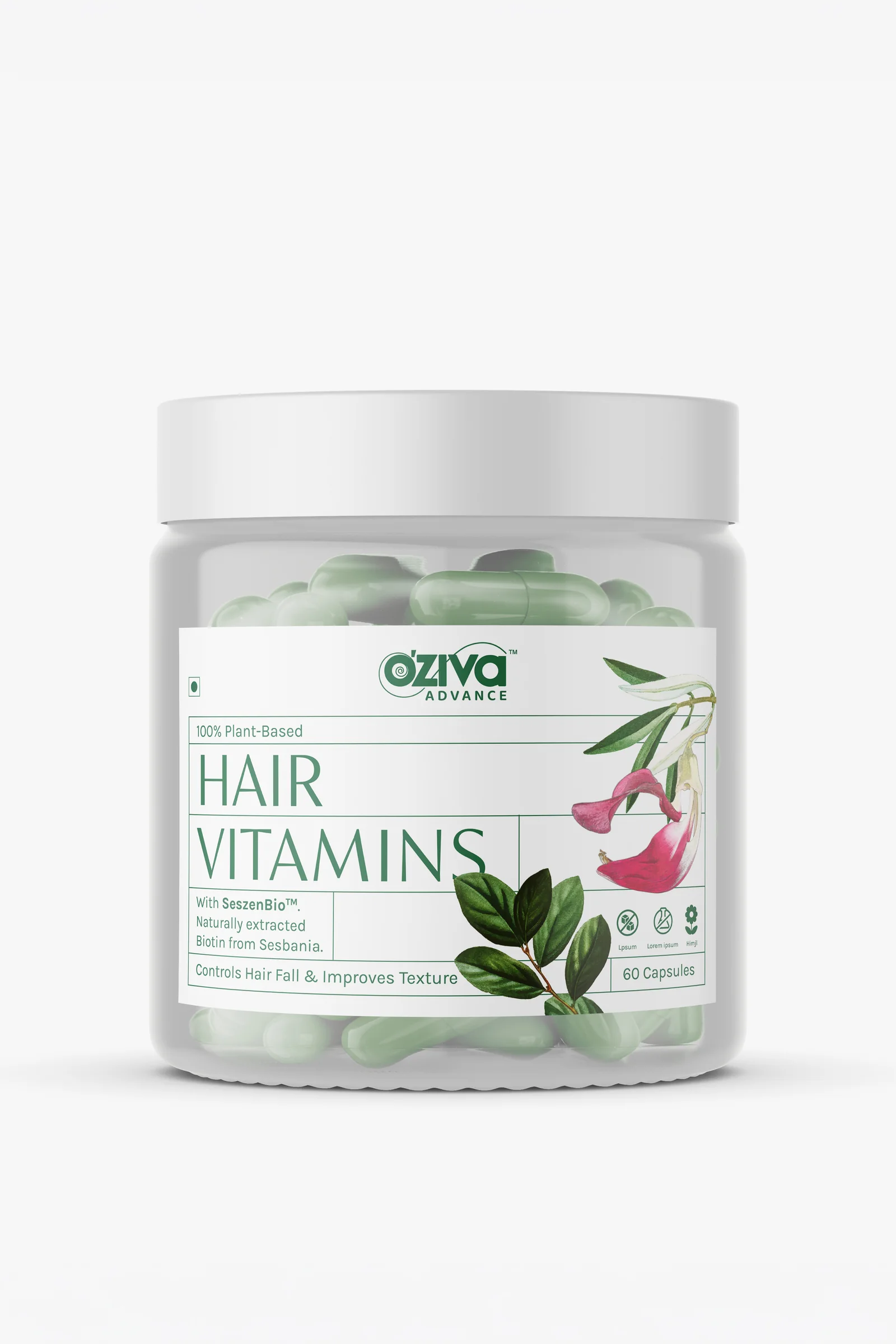
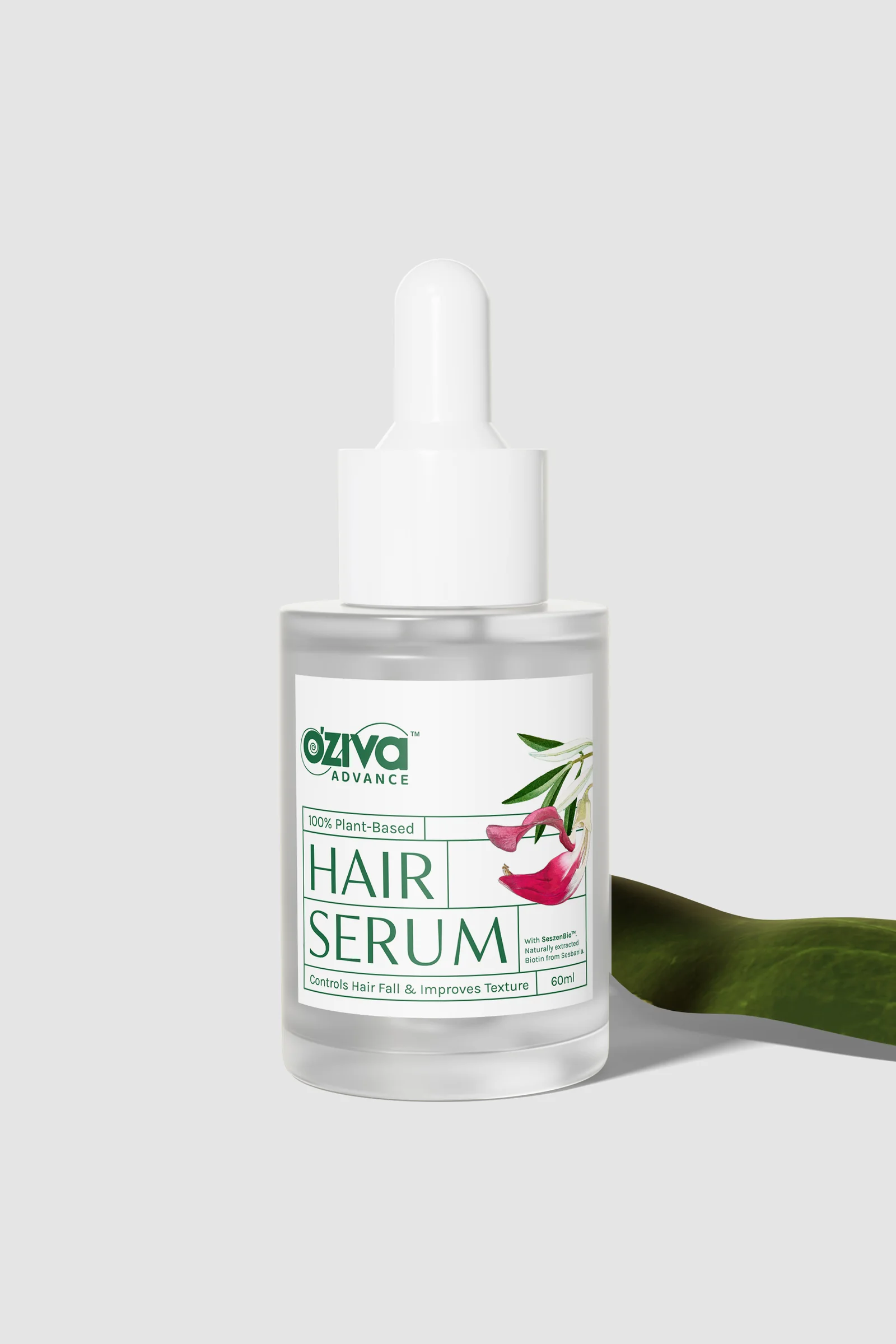
An alternative route, argued for hard. The client team felt it had strayed too far.
It fit the original brief exactly. As the brief grew, the reason HUL killed it became clear.


HUL was already aware of the entry point gap and had been planning for it. Yellow's research resonated with their team and built trust.
The brief grew from one line to three: the Advanced range, an updated baseline, and gummies under a new entry tier, OZiva Go.
The Go line was designed by another team.